
Federation of International Bandy (FIB) General Secretary Attila Adamfi met with Pierre Ducrey, IOC Sport Director, and Tania Tchea, Head of Recognised International Federations, at the International Olympic Committee headquarters in Lausanne.
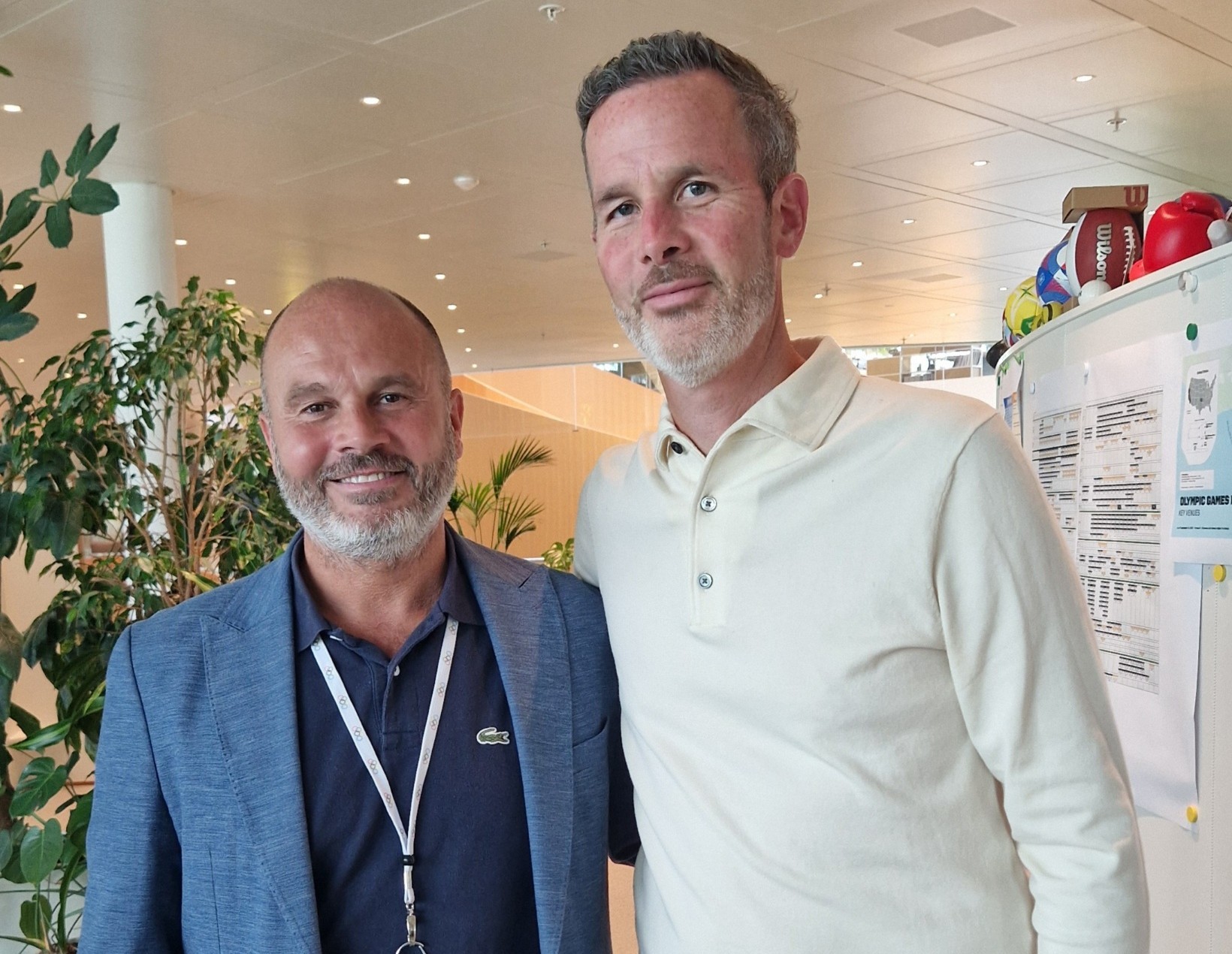
Attila Adamfi, FIB and Pierre Ducrey, IOC
The meeting provided an opportunity to update the IOC on the latest developments within bandy and the Federation of International Bandy, while also discussing the sport’s continued development, international recognition and long-term Olympic ambitions.
Adamfi presented an overview of bandy and FIB’s recent development, including the organisation’s governance and integrity reforms since 2022. FIB’s progress in applying good-governance principles was highlighted, together with the positive findings of the recent ARISF Good Governance Review, which recognised one of the most significant improvements among assessed federations.
A particular focus was placed on Short Bandy, FIB’s newest discipline. The discipline is entering a new phase of development, with an international club tournament planned in Switzerland in September 2026. Its ability to make use of existing ice-hockey infrastructure provides opportunities for FIB to expand participation and organise competitions in venues already available in many countries.
Adamfi also presented the Federation’s broader development ambitions and its objective of making bandy more accessible to new countries and athletes.
The implementation of the IOC recommendations concerning Russian and Belarusian athletes was also discussed. FIB has followed the IOC recommendations and established recently an Integration Working Group to address the practical and sporting aspects of the process. The meeting also recognised the different positions within the bandy community.
A significant part of the meeting focused on FIB’s ambitions regarding the IOC’s ‘Fit for Future’ process and the potential inclusion of bandy in the Olympic Winter Games programme.
FIB outlined its ambition to pursue a pathway towards the Olympic Winter Games, including the possibility of targeting 2034. The discussions included the evaluation and recognition process, the criteria used in assessing sports and disciplines, and the importance of ensuring that the specific characteristics and development potential of bandy are properly reflected in future evaluations.
FIB emphasised that bandy can make a significant contribution to the Olympic Movement while requiring comparatively limited additional infrastructure. Bandy can utilise existing or shared venues, creating opportunities for efficient venue use.
The discussions reinforced the importance of continued cooperation between FIB and the IOC as bandy develops its international footprint, strengthens its governance and integrity framework, and works towards its long-term Olympic ambitions.
The meeting represents another step in FIB’s ongoing engagement with the IOC and its efforts to position bandy for further international growth and future Olympic opportunities.